

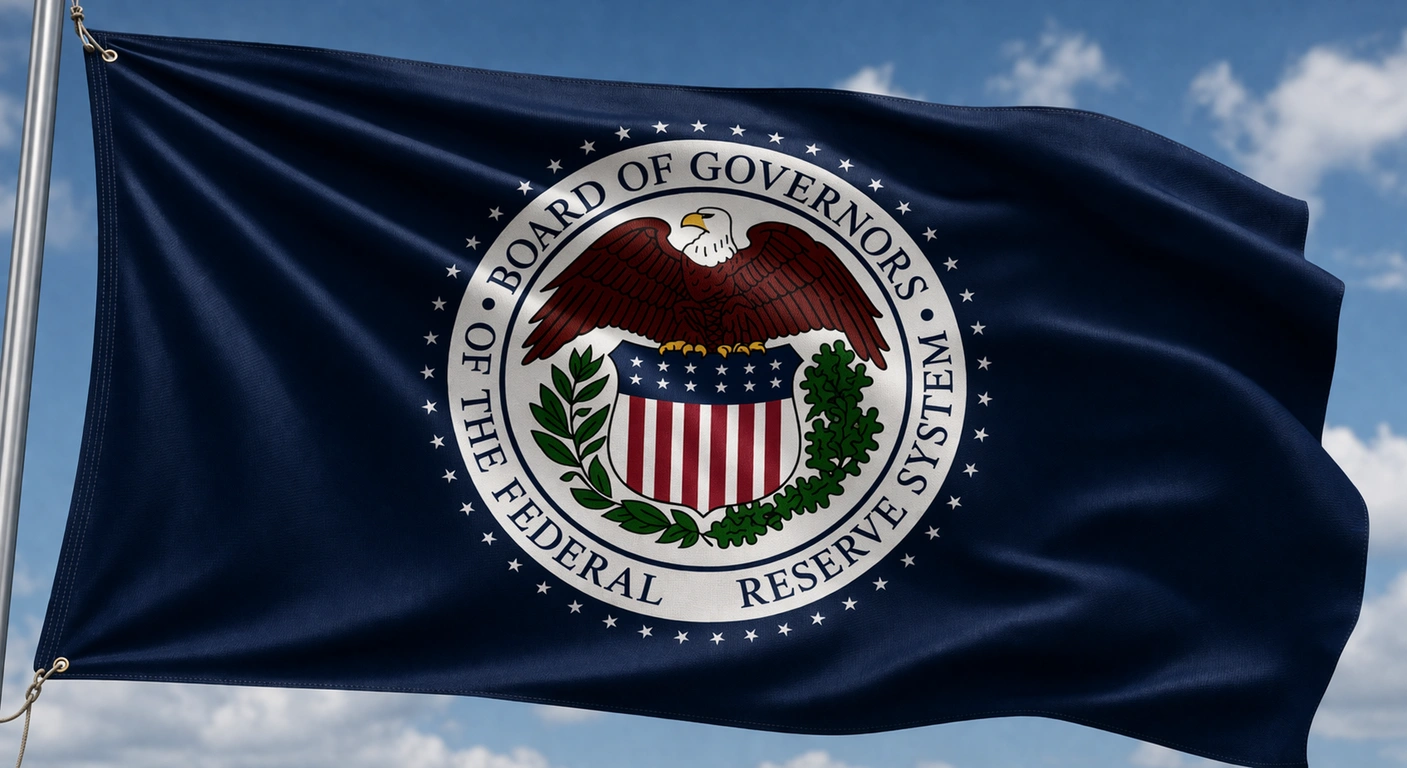

Every country has a “central bank” that issues money. Just as the United Kingdom has the Bank of England, China has the People’s Bank of China, and Korea has the Bank of Korea, the United States also has its own central bank. However, the U.S. does not call it “Central Bank of the United States” but instead refers to it as the Federal Reserve.
Why did the United States not choose a straightforward name like other countries, and instead call it the “Federal Reserve”?
The answer becomes clear when you look into American history. And what kind of structure does it have, and how is it operated?
Understanding the Federal Reserve will help you, me, and everyone in all the places we invest.
The First Story of the Federal Reserve, How Did It Come Into Existence?
The Federal Reserve (FED) did not appear from the beginning as a fully formed institution saying, “We are the central bank of the United States.” After gaining independence from Britain, the United States found itself in a situation where it had to organize the economy and financial order that had been disrupted by war. The person who appeared at that time was Alexander Hamilton. Hamilton believed that for the newly established United States to function properly, it needed a central institution to control the flow of money and organize financial order. So under his leadership, an institution close to the first central bank of the United States, the First Bank of the United States, was established.
However, there was one thought that crossed the minds of Americans at the time.
That uncomfortable memory that remained in the back of their minds.
“We fought so hard to break away from Britain, but are we just going to end up with another power above us controlling everything again?”
This sense of unease was the reason.
So the history of central banking in the United States can be seen as a repeated process of creating it out of necessity, abolishing it out of fear, and then realizing it was needed again—eventually leading to the unique system known as the Federal Reserve.
Why Didn’t They Welcome a Central Bank from the Beginning?
Even before gaining independence from Britain, Americans strongly disliked the idea of a powerful central authority far away interfering in their lives. Here, “central” does not simply mean that power exists in a capital city, but rather a situation where political power, financial power, and control over taxation and money are all concentrated in one place.

At the time, Britain, from far across the ocean, imposed taxes on the American colonies, controlled trade, and essentially dictated, “This is how you will live.” From the perspective of the colonists, it was already frustrating to be politically controlled, but having their financial matters controlled by a distant power was even more unacceptable.
So even after independence, this feeling remained in the minds of Americans.
“We became independent from Britain, but are we about to create another ‘Britain’ within our own country?”
Because of this unease, even when the idea of a central bank-like institution was proposed, it was not easily welcomed.
(This led to debates between those who supported central bank independence and those who opposed it. Today, however, the focus of the debate has shifted. The question is no longer whether independence is needed, but how far that independence should go.)
Despite this, reality was unforgiving.
To run a country, a central axis for money was necessary, and there needed to be an institution to maintain financial order. So figures like Hamilton argued that such an institution was necessary, and eventually the First Bank of the United States was created.
However, in the eyes of many people, this bank appeared not so much as a “necessary institution” but as one that could hold too much power.
To put it simply,
“It was like needing a manager to run an apartment, but feeling uneasy if that manager had a master key to every unit and could freely use the maintenance fees paid by all the residents.”
Eventually, opposition grew, and the First Bank of the United States was abolished.
Then Why Did It Become Necessary Again After Being Abolished?
Right after the First Bank of the United States was shut down, the U.S. financial system began to shake again. Originally, a central bank played a role in keeping private banks from increasing the amount of currency as they pleased, but that function disappeared.
To put it simply, it was like a teacher suddenly disappearing from a classroom.
Some students talk, some leave the classroom, and some just fall asleep. In short, it becomes a lawless situation.
In the same way, the financial system quickly began to move in all directions without control.
After that, private banks rapidly increased in number, and as each bank issued its own currency, the variety of money grew and confusion intensified.
On top of that, the War of 1812 made it even harder for the government to raise funds and manage its finances.
Eventually, the United States realized once again that it needed an institution to restore financial order, and thus the Second Bank of the United States was established.
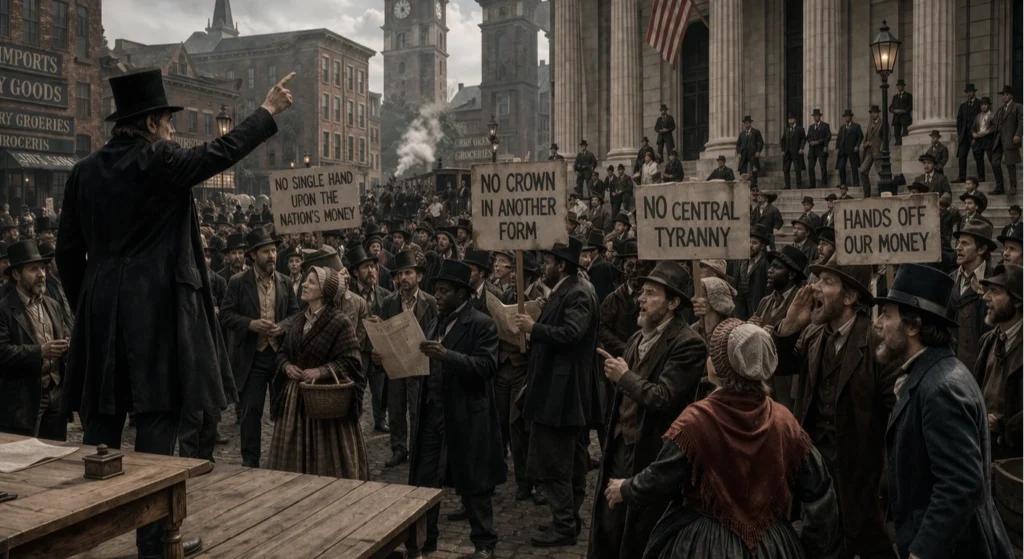
But once again!! it did not last long!!! The reason was similar.
Americans still disliked power being concentrated in one place, and President Andrew Jackson at the time viewed the bank as an institution that favored wealthy elites and financial interests. As a result, the Second Bank of the United States was also shut down for reasons similar to before.
After that, the United States went without a central bank for quite a long time. But this situation was like being told to navigate a busy intersection without any traffic police. It might somehow work in normal times, but when something goes wrong, everything falls apart.
There were many banks, money was circulating, and the market was growing, but the question of who should maintain order remained unresolved. Every time a financial crisis occurred, the entire country would be shaken.
Then, in 1907, a decisive event occurred: the Panic of 1907.
Banks began to collapse, people rushed to withdraw their money (bank run), and the entire system showed signs of breaking down.
Today, a central bank would step in to supply money and stabilize the market, but at that time, the United States had no such institution. So who filled that gap? It was J.P. Morgan.
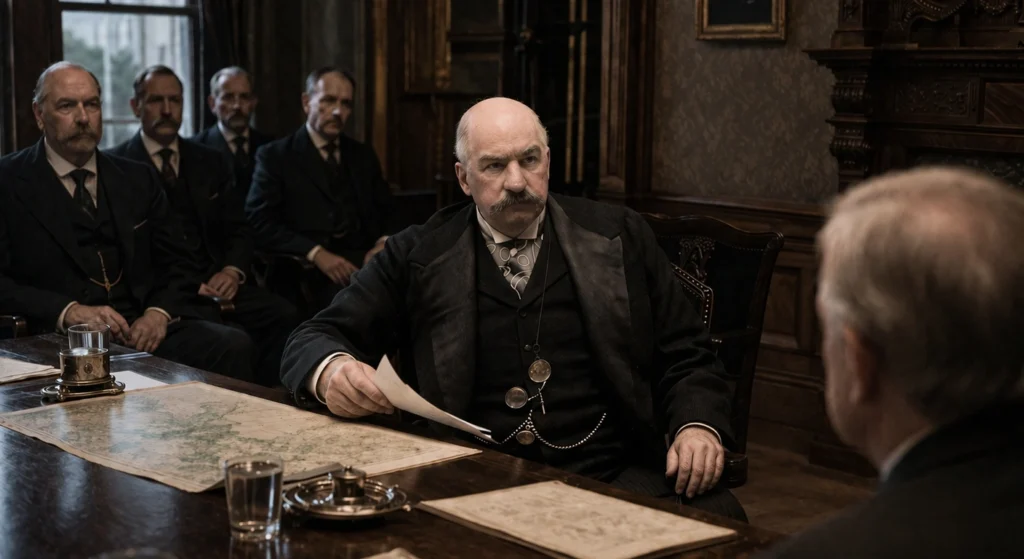
This moment is extremely important. At a time when the nation’s financial system was on the verge of collapse, a single individual gathered bankers, pooled money, and injected funds into the market—essentially acting as a central bank. In simple terms, a private individual performed the emergency response that the state should have handled. This crisis finally made the United States realize:
“This cannot continue.”
“If we keep going like this, we will have to rely on individual heroes every time a crisis happens.”
“We absolutely need a system that can maintain order at the center.”
However, creating something openly called a “U.S. Central Bank” would have triggered backlash again, since Americans still disliked concentrated central power. So a uniquely American compromise emerged: create something that functions as a central bank, but design it as a decentralized system.
As a result, in 1913, the ‘Federal Reserve System’ was born.
(TMI : The Federal Reserve is currently located in Washington, D.C., the capital of the United States.)
The name itself is very important. Why not simply call it “U.S. Bank” or “Central Bank of the United States”?
The United States deliberately avoided that. Calling it a single “Bank” would have caused resistance again. So they used the word “Federal” to represent the entire union of states, “Reserve” to imply preparing money for times of crisis, and “System” to emphasize that it is not one giant bank but a structure in which multiple regional banks and central organizations work together.
In one sentence, it can be summarized like this:
The United States is not a country that failed to create a central bank because it didn’t need one. It is a country that knew it needed one, but disliked concentrated power so much that it repeatedly created and abolished central banking institutions, and after many reversals, eventually arrived at a compromise system called the Federal Reserve.
That is why the Federal Reserve is not a single building, but a structure where multiple components work together. There is the Board of Governors, the FOMC that decides interest rates, and 12 regional Federal Reserve Banks across the country. Instead of one massive headquarters controlling everything, it operates as a system where the headquarters, regional branches, and committees are all interconnected. This is why the word “System” is deliberately included in its name.
Today, the Federal Reserve functions as the central bank of the United States, responsible for interest rates, money supply, and financial stability. But if you look at its origin, it is very much “American” in nature.
“We need a central bank. But we don’t want too much power concentrated in one place.”
This seemingly contradictory and cautious attitude is what created the unique structure of the Federal Reserve.
Next, we will take a closer look at how this system actually operates—who is inside it, who makes decisions, and who carries them out. Once you understand that, it becomes much easier to see why the Federal Reserve is still considered the core of the global economy today.
The Second Story of the Federal Reserve, the Three Main Components that Make Up the Federal Reserve
The Federal Reserve (FED) may sound like one huge bank, but in reality, it is not. It is more accurate to see it as a system created by Americans who were uncomfortable with power being concentrated in one place. So instead of trying to understand it all at once, it is much easier to break it down into three parts.
- Board of Governors of the Federal Reserve System
- Federal Open Market Committee
- Federal Reserve Bank
These may look like one organization, but each has a slightly different role. One sets the direction, one makes key decisions, and one actually puts those decisions into action in the market. Once you understand this flow, the structure of the FED becomes much clearer.
Board of Governors
The Board of Governors is essentially the core headquarters team of the Fed. You can think of it like the CEO and top executives of a company. The Board oversees the entire system and sets the overall direction. It looks at the big picture—questions like “What is the current state of the economy?” and “Where should we be heading next?”
An important point is that the Board does not decide interest rates on its own. Instead, it sets the overall framework, establishes financial policy guidelines, and manages the system as a whole.
A simple way to think about it is:
👉 “The executive team that decides how the company should be run.”
The Fed Chair, Jerome Powell, is part of this Board and serves as the public face of the Fed. Currently, Powell is the head of the Fed, and his term ends in May 2026. Also, the Board of Governors consists of seven members, each serving a long 14-year term to ensure political independence. And to emphasize once again, this is not a system where one person makes all the decisions. The Fed was never designed that way.
FOMC (The Meeting that Decides Interest Rates)
The FOMC may sound complicated, but its structure is actually simple.
👉 It is the official decision-making body that sets interest rates.
One common point of confusion is this:
“If it’s just a meeting, why is it treated like a major institution?”
The reason is simple. This is not just a discussion. The decisions made here directly move the entire economy. That’s why it’s not just a meeting—it’s a formal decision-making body.
The FOMC meeting includes the following participants:
- 7 members of the Board of Governors
- 1 President of the New York Federal Reserve Bank (always participates)
- Other regional Federal Reserve Bank presidents (who participate on a rotating basis)
Why does only New York always participate?
When you think of New York, what comes to mind? The Statue of Liberty? Times Square? The Brooklyn Bridge? No.
Wall Street. The global center of finance, where massive amounts of money flow every day. That’s why New York is always part of the meeting. No further explanation needed.
At this meeting, they decide:
👉 “Should we raise interest rates?”
👉 “Should we lower them?”
In simple terms, it’s like:
👉 “The core meeting where a company decides whether to raise or lower the prices of the products it sells.”
If the Board is the headquarters, then the FOMC is
👉 “the strategy meeting where the most important decisions are made.”
(The FOMC is usually held eight times a year, at roughly six- to seven-week intervals.
At these meetings, the Fed mainly looks at inflation and employment indicators, and then decides whether to raise, lower, or keep the U.S. policy interest rate unchanged)
If you want to see the FOMC meeting schedule and the interest rate decision announcement schedule, take a look here.
https://www.federalreserve.gov/monetarypolicy/fomccalendars.htm
It is also a good idea to refer to the Fed’s official live streaming site.
https://www.federalreserve.gov/live-broadcast.htm
Federal Reserve Banks (12 Regional Institutions)
Federal Reserve Banks are not just “banks located in different regions.” They exist because of the structure of the United States itself. The country is vast, and economic conditions vary widely from one region to another. Some areas are industrial, some are financial centers, and others are more agriculture-based. Trying to manage everything from one place would simply not work. That’s why the system places Federal Reserve Banks across different regions to oversee local banking and monitor regional financial conditions.
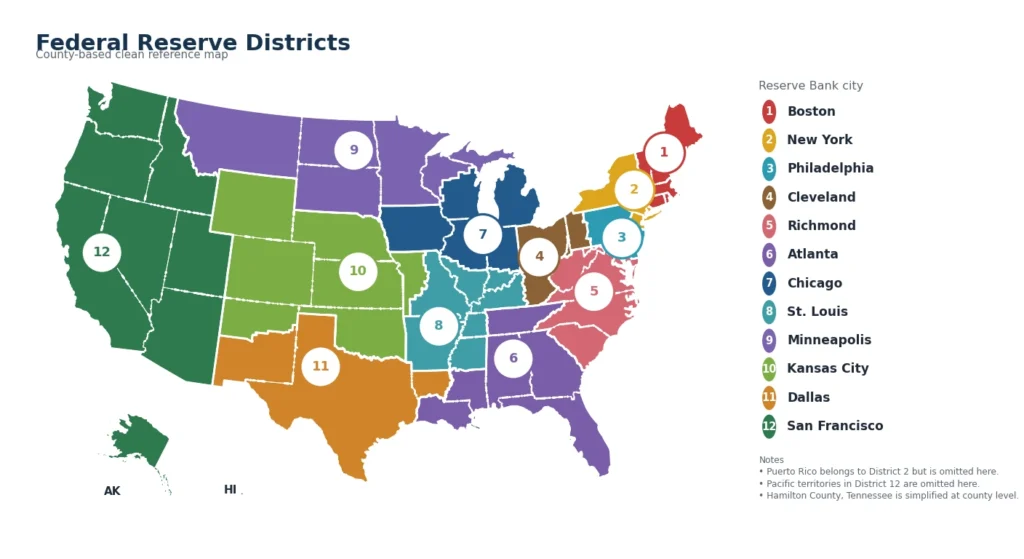
In total, there are 12 Federal Reserve Banks located across the country:
Boston, New York, Philadelphia, Cleveland, Richmond, Atlanta, Chicago, St. Louis, Minneapolis, Kansas City, Dallas, and San Francisco.
👉 “So are these like commercial banks such as Chase?”
👉 No.
These are not banks where individuals deposit money or take out loans.
👉 They are “banks for banks.”
There is one especially important point here:
👉 The Federal Reserve Bank of New York
This bank is slightly different from the others.
That’s because it is responsible for actually injecting money into the market and operating directly within financial markets.
👉 That is why the President of the New York Fed has a permanent voting role.
Final Summary
In short:
👉 The Board of Governors sets the direction
👉 The FOMC makes the decisions
👉 The Federal Reserve Banks carry out those decisions in the real market
Once you understand it this way, the structure of the Federal Reserve is no longer complicated.
In conclusion,
Why am I focusing specifically on the Federal Reserve (FED) while leaving out other countries’ central banks?
The reason is simple.
About 70% of global transactions are conducted in dollars, which is the world’s reserve currency.
What this means is that it is not just about the United States doing well.
When U.S. interest rates rise, countries like Korea, Europe, and Japan are affected as well. When the U.S. injects money into the economy, that liquidity spreads across global markets.
So even if we are not Americans,
whether we invest in stocks, crypto, or real estate,
without understanding the FED, it becomes difficult to truly understand why markets move the way they do.
The Federal Reserve is not just the central bank of the United States, but the core driver of global money flow.
That is why this topic was discussed separately.
