


There is something we almost always check at least once before going on a trip or buying something from overseas. It is the exchange rate that we look up on Google.
Because different currencies are used around the world, exchange rates are absolutely necessary when countries buy and sell goods, travel, or send money to one another. So the exchange rate is not just a simple number. It is an important signal that shows how strong or weak one country’s currency is relative to another, and how the market is viewing that country’s economy.
To put it dramatically,
“Our country is doing pretty well?”
“Our country is in serious trouble?”
It means that you can, to some extent, guess that kind of atmosphere through the exchange rate.
Of course, you cannot judge an entire country’s economy based on the exchange rate alone, but that is exactly how closely tied the exchange rate is to reality. When the exchange rate moves, it does not only change exchange costs. It also affects overseas travel, overseas direct purchases, study-abroad expenses, import prices, corporate imports and exports, prices, and interest rates across the economy.
In this article, let us easily go through what the exchange rate is, why it was created, what factors move it, why the dollar is important, foreign exchange reserves and the foreign exchange market, and how the exchange rate affects our daily lives and the economy.
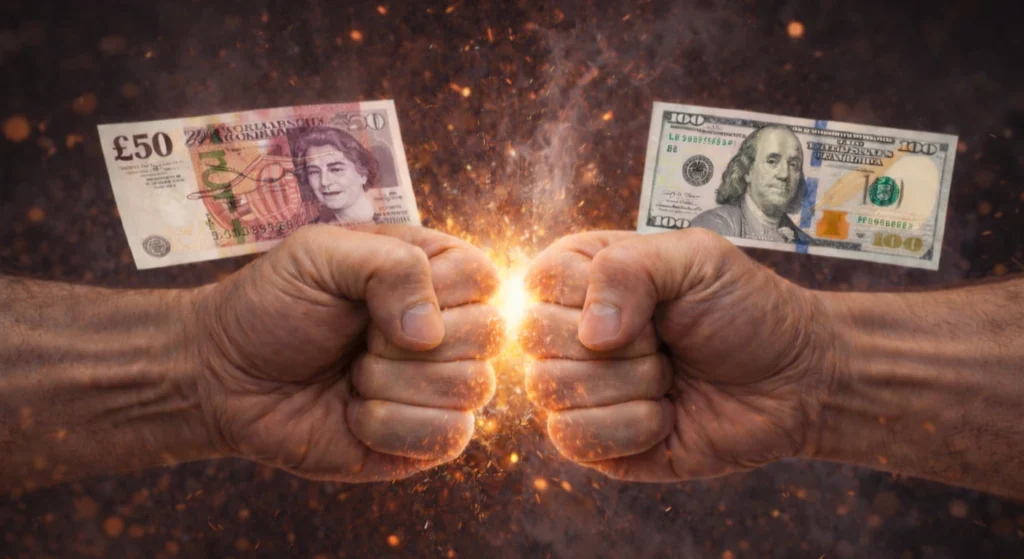
What Does the Exchange Rate Represent?
The exchange rate is a number that shows how strong money is between one country and another.
Simply put, you can think of it as a kind of price tag that shows which country’s money is being recognized as more valuable when different currencies go head-to-head.
For example, let us say one American apple costs 1 dollar.
At first, 1 pound had enough value to buy 1 American apple.
But if one day 1 pound became worth enough to buy 2 American apples, then that means the same 1 pound can now buy more than before.
In other words, you can say that the value of the pound has become stronger than the dollar.
It is even easier to understand if we switch this into money.
Let us say that at first, if you exchanged 1 pound into American money, you could get 1 dollar.
But if one day you exchanged 1 pound and could now get 2 dollars, then that means the same 1 pound can now be exchanged for more dollars.
So this, too, can be understood as the pound becoming stronger in value than the dollar.
On the other hand, if in the past you could exchange 1 pound for 1 dollar, but later you could only get 0.8 dollars, then you can say that the value of the pound has weakened by that much.
In this way, the exchange rate is not just a number we look at only when we go to the bank before traveling to another country and exchange money while looking at the exchange-rate board. It is quite an honest number that shows how much the currencies of different countries are competing in strength and how the market is evaluating them right now.
So looking at the exchange rate is not just about looking at the ratio for changing money. It is similar to also looking at
📌“Which country’s currency is stronger right now?”
📌“Why has this currency become stronger and that one weaker?”
❗Wait a moment, how are currency pairs expressed?
Exchange rates are written in many currency pairs such as CAD/USD, USD/JPY, JPY/EUR and KRW/USD. If you just glance at them and move on because they look similar, it can be easy to get confused. That is because the meaning changes depending on which currency is placed in front. Even when comparing the same countries’ currencies, the way you read them changes if the order changes. So there is no harm in at least knowing this part lightly.
📍 (The exchange rate examples were calculated based on the exchange rate on the date this post was written, and the actual exchange rate may change. 2026-04-15)
USD/KRW means
“how many won for 1 dollar.”
In other words, it is a number that shows how much Korean won is needed when looking at it from the dollar’s point of view.
For example, if USD/KRW = 1,474
it means you need 1,474 won to buy 1 dollar.
Simply put,
“right now, the dollar’s price is 1,474 won.”
You can understand it like that.
On the other hand, if it is written as KRW/USD, the viewpoint changes.
This can be understood as
“how many dollars for 1,000 won.”
In other words, it shows how much the dollar is worth when looking at it from the won’s point of view.
For example, let’s say KRW/USD = 0.68.
Then it means if you exchange 1,000 won into dollars, you can get 0.68 dollars.
Simply put,
“right now, the price of 1,000 won is 0.68 dollars.”
You can understand it like that.
So,
USD/KRW = looking at won from the dollar’s point of view
KRW/USD = looking at the dollar from the won’s point of view
Even when comparing the same two countries’ currencies,
the way of speaking changes depending on which one you put in front.
Simply put,
the currency in front is the main character, and the currency in the back is the price tag.
This line is the easiest to remember.
Front currency = the base currency
Back currency = the currency used to price it
For example, JPY/EUR can be understood as
“how many euros for 100 yen.”(100 yen = 0.53 euro)
That makes it easier to understand.
On the other hand, EUR/JPY means
“how many yen for 1 euro.”(1 euro = 187 yen)
So there is no need to look at currency pairs as something difficult.
It is simply
“how much the money in front is worth in the money behind it.”
That is what currency notation is showing.
Why Did the Exchange Rate Come About?
The exchange rate was not something someone suddenly invented. Different countries used different money, and as they traded with one another, it naturally became a standard that was needed.
Even in the old days, trade between countries was active, but the problem was that the other side might not immediately trust and accept our country’s money. That is because they might be thinking something like this inside.
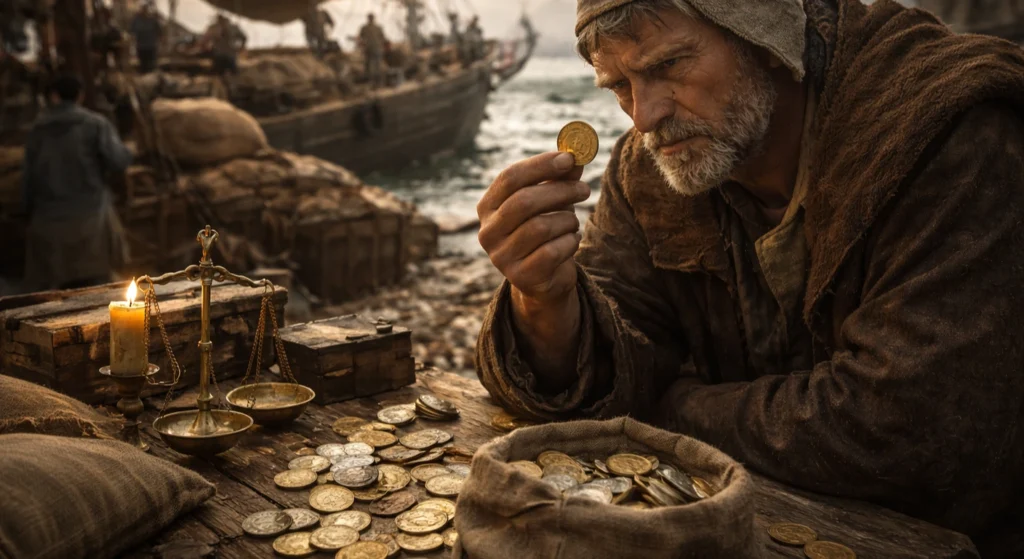
“What? Is your money even trustworthy?”
This happened even in the very old days when people traded with gold and silver. The amount of gold and silver contained in gold coins and silver coins differed by region and country, and their purity and weight were all different too. Some coins were accepted more easily, while others were accepted less easily.
That is the core of it.
「The other side has to trust the value of that money for it to be usable.」
If I received some money and later showed it to someone else, and they said,
“We do not accept that,”
then even if I am holding that money, it could become useless.
So people naturally came to set a standard like,
“Then how much should your money be worth in my money?”
That standard is what became the exchange rate.
That is the beginning of the exchange rate.
At first, it was not an era where numbers appeared on screens like they do now. So it was more simple.
- How much gold was in this money,
- 그 안에 은이 얼마나 들어있었나요?
- whether it had real value,
whether it was money that would also be accepted in other regions,
these were the things people considered important.
Simply put, in the old days, people looked at the money itself and first asked,
“Is this really money I can trust?”
That was the first thing they examined.
As time passed, the world became more complicated. Paper money started to be used much more, banks grew, and differences between national economies began to widen.
Because of that, people stopped simply looking at
“Does it contain gold or silver?”
and it became more important how much people trusted that country’s money.
Here is one simple and clean example.
Would more people trust Zimbabwean money, or American money?
There is no need to explain any further.
That is right.
In the end, 「trust」 is what matters for money.
So the exchange rate is not just a number for changing money. Inside it are also meanings like
“Which country’s money do people trust more?”
“Which money is stronger right now?”
To sum it up in one sentence:
The exchange rate came about because countries used different money, and in order to trade with one another, they needed a standard to compare the value of that money.
The Factors That Move the Exchange Rate
The exchange rate does not move on its own.
There is always something behind it pushing money up or pulling it down.
So what are the main things that move the exchange rate?
- Interest rates: Money tends to gather in countries that offer higher interest
- Prices: If prices are unstable, trust in that country’s money can be shaken
- Trade: Imports and exports can make a certain country’s money more necessary
- Expectations: Even things that have not happened yet can move first just because of a mood like “It seems like that might happen soon”
- The economy: If a country’s economy looks solid, money flows in; if it looks unstable, money flows out
- Crisis variables: When war, a financial crisis, or political instability happens, money moves toward what is seen as the safer side
Shall we take a closer look?
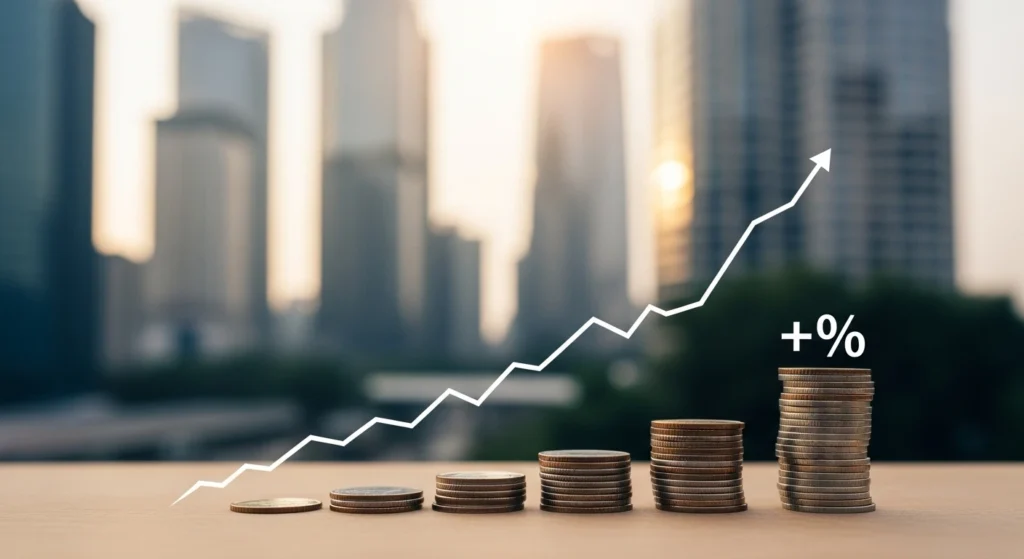
📌 First, interest rates
The first thing people look at most is interest rates.
Money is very honest.
For example, if a country raises its interest rate,
“Oh? If I leave my money there, they give me more interest?”
Then investors try to buy that country’s money and move it there. In that process, more people start looking for that country’s currency, and since demand rises, the value of that country’s money tends to rise too.
What happens when interest rates go down instead?
“Oh? They give less interest there now?”
Then investors have less reason to keep holding that country’s money for a long time. Money tries to move out to other countries that offer higher interest, and in that process, there is more movement to sell that country’s currency. As a result, demand falls and supply rises, making it easier for the value of that country’s currency to weaken.
Simply put, money also ends up going where it gets treated better.

📌 Second, prices
Why do prices affect the exchange rate?
The reason is simple. If prices shake too much, people stop viewing that country’s money positively.
Prices and the value of money have a strong inverse relationship. When prices rise, the value of money falls, and when prices fall, the value of money rises.
In the past, if you could buy one glass of beer with 10 dollars, but now you need 12 dollars for one glass, then the value of that 10 dollars has fallen compared to before.
That is the key point. When prices rise, it does not just mean that goods have become more expensive. It also means that the real power of that country’s money has weakened.
If you need content related to inflation, click the link and go in.
So when prices rise too quickly, people start thinking,
“Oh? Is this money going to keep losing value?”
That kind of anxiety appears, and they stop wanting to hold that money.
In the end, what matters about money is how much it can buy, and how much it can keep that value and strength going forward. That is why prices are an important factor that affect exchange rates.
📌Third, Economic Conditions
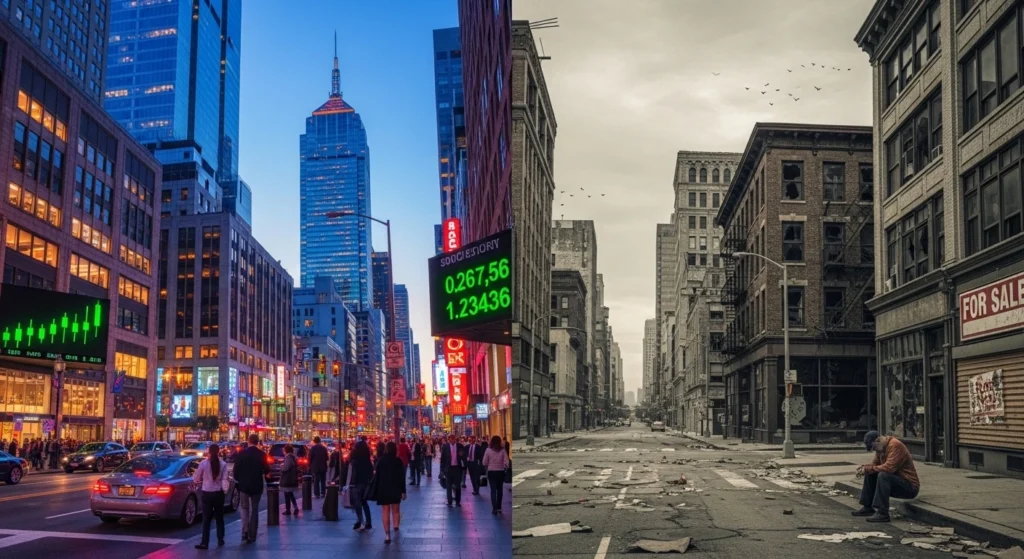
If a country’s Economic Conditions is doing well, companies make money, investment increases, and people also view that country positively.
Why is that important? Because money tends to flow into countries whose economies look fine, and tends to flow out of countries whose economies look unstable.
When an economy looks fine, it usually means this. Corporate earnings are not bad, jobs are being maintained to some degree, consumption is still alive, and the overall national mood does not look like it is about to completely collapse.
Then from an investor’s point of view, it becomes easy to think like this:
👉“There is still opportunity here.”
👉“It looks worth putting money into stocks, bonds, or real estate.”
👉“At least it does not look like it is about to collapse right away.”
Then naturally, more people begin trying to buy that country’s assets. They buy that country’s stocks, bonds, and even try to do business there. To do that, they ultimately need that country’s money, and that is when they exchange currency. That is why money starts flowing in.
On the other hand, when an economy looks unstable, it means something like this. Corporate earnings are declining, prices are unstable, the economy is cooling, and even the government or financial system may look shaky.
Then investors begin to think like this:
👉“What if I stay here and end up taking a bigger loss?”
👉“What if stock prices fall even more?”
👉“What if this country’s money itself becomes weaker?”
From that moment, people switch from trying to make profits to trying to avoid losses. Then instead of staying and cheering things on, they are more likely to sell and get out first.
That is because, from an investor’s point of view, there are few things scarier than losing money.
📍That is why the market is extremely cold.
📌Fourth, Trade
This is more real than people think.
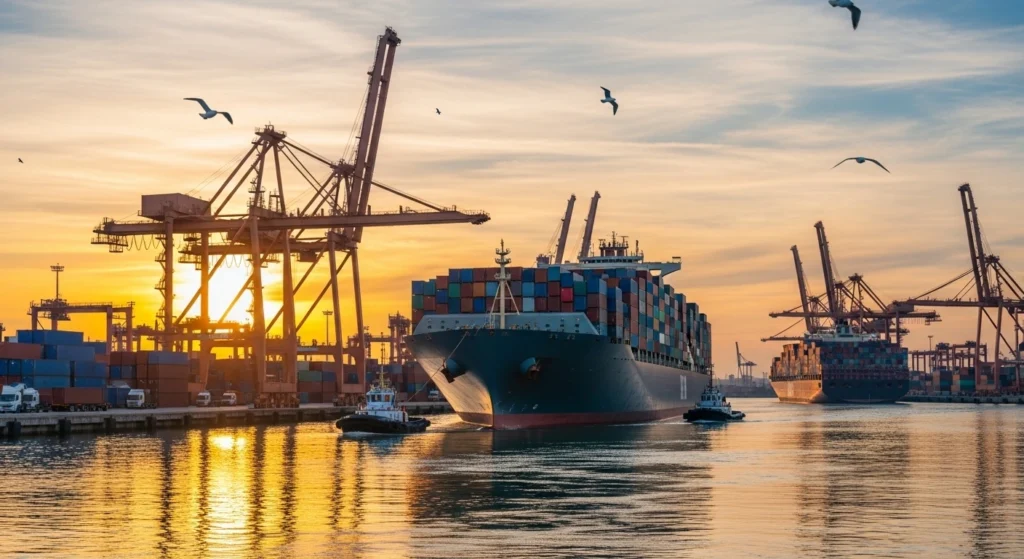
For example, let us say companies in a certain country have to buy a lot of oil, parts, or food from overseas. Then they need more foreign currency, such as dollars, in order to make payments.
If more people try to buy another country’s money, the value of that money tends to rise. On the other hand, if a lot of foreign money comes in because exports are strong, the flow can change again.
In other words, the exchange rate is not some distant economic theory. If you think in terms of supply and demand, it becomes easy. Who in the market is looking for which money more—that is exactly what gets reflected in the number.
📌Fifth, Expectation(s)
Why do expectations affect the exchange rate?
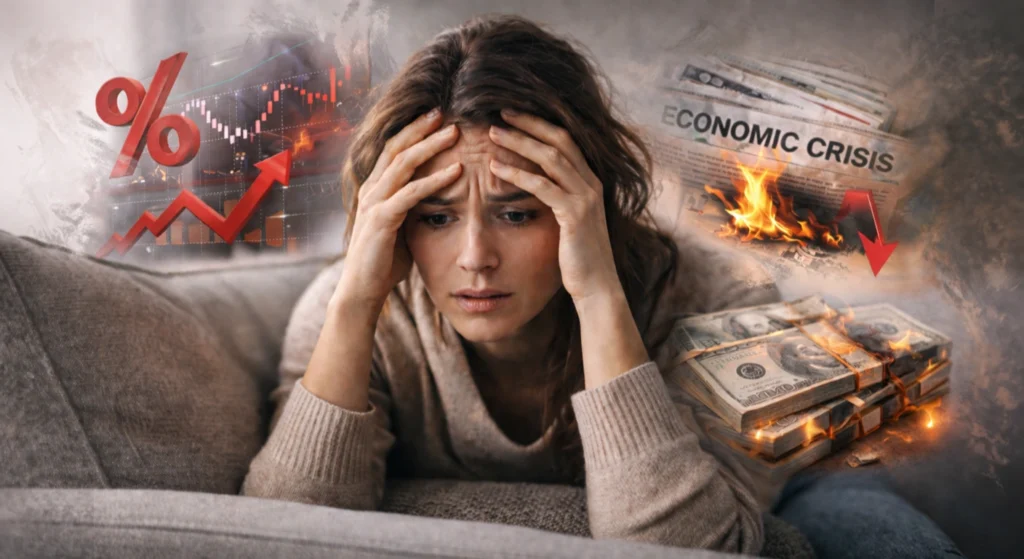
Expectations can never be ignored. Why? Because in the end, it is people who move money, and people often react not only to what is happening now, but to what they believe will happen next.
And sometimes this is actually the scariest part.
Why? Because we always live with anxiety. We are more sensitive to negative signals than positive ones, so we get scared in advance about things that have not even happened yet.
For example:
👉“It seems like interest rates will rise soon.”
👉“It seems like the economy will get worse soon.”
👉“It seems like this country’s money will become risky soon.”
When these kinds of expectations spread, people move first.
That is because the market is not a place that only looks at reality. It is a place that imagines what is coming next and reacts before it fully arrives.
📌Lastly, Various factors
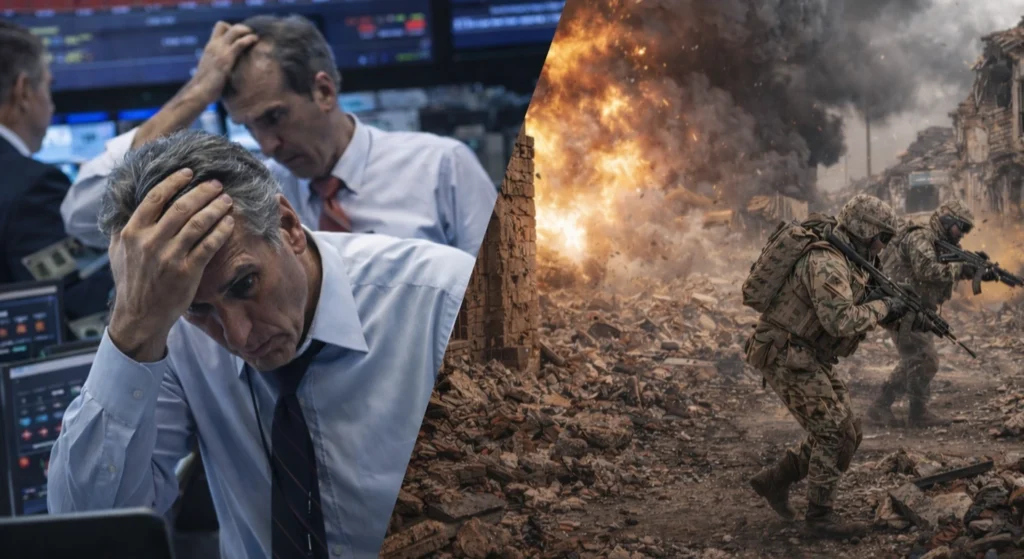
Things like war, financial crises, and political instability can flip the market atmosphere upside down all at once.
When these things happen, people try not to manage money aggressively. Instead, they try to hide in places that look less risky.
Simply put, in normal times people look at
“Where can I make more money?”
but in times of crisis that suddenly changes into
“Where is less risky?”
So when fear grows, people may rush into the U.S. dollar, which is seen as relatively safe. When the market gets scared, money moves much faster than people think.
In the end, there is no need to see exchange-rate movements as something difficult.
Interest rates, prices, the economy, trade, crises, and psychology.
These things overlap and keep changing
“Which country’s money looks more attractive?”
and
“Which country’s money looks more unstable?”
How Does the Exchange Rate Affect Our Daily Lives?

Overseas travel and exchange, and study-abroad costs
When the exchange rate rises, the amount of foreign currency you can exchange for with the same amount of money decreases, so the burden of travel expenses grows. You feel it right from the moment you exchange money.
And it is the same when you send your child abroad to study. It is not just tuition. The costs of food, clothing, and housing that come up while living there are much bigger than people think. When the exchange rate rises, that burden can only grow heavier.
Overseas direct purchases and import prices
When the exchange rate rises, overseas shopping becomes more expensive, and it can also affect the prices of imported raw materials or imported products.
I also, while thinking about buying a 5000-series graphics card, ended up buying it while holding back tears as I watched the price rise in real time because of the exchange rate.
“Today is the cheapest…”
“Tomorrow will be more expensive”
That is what I kept thinking…
Oil prices and everyday prices
Since oil and raw materials are often traded in dollars, when the exchange rate rises, it can lead to burdens in oil prices, transportation costs, and everyday prices.
If you want to know why prices rise, that content is in the inflation post.
Investment
People who hold overseas assets such as U.S. stocks, overseas ETFs, or dollar deposits can see their profits and losses change depending on the exchange rate.
Increased profits for exporting companies
A positive for exporting companies: Companies that sell products in dollars (Japan’s Toyota/Sony, Korea’s Samsung/Hyundai, China’s BYD, etc.) see profits rise when the exchange rate rises (when the value of the yen/won/yuan falls).
Effects when the exchange rate falls
On the other hand, if the exchange rate falls, the exact opposite of the above happens.
The exchange rate is no longer just a number you look at when exchanging money for travel or overseas direct purchases. It is also quite an honest number that shows roughly how much our country’s money is worth right now.
In the next article, let’s dig into the other stories hidden behind the exchange rate together as well. The foreign exchange market, exchange gains and exchange losses, and even why the dollar always seems to follow whenever the topic of exchange rates comes up.

2 thoughts on “What Is Exchange Rate? (1/2)”
Comments are closed.